
DP World Expected to Earn Nearly Two Billion USD in 2025
DP World Group has just announced record business results for 2025 with profits reaching $1.96 billion, a 32.2% increase compared to the previous year. This positive result stems from strong growth in its global port operations, terminal, and logistics segment. Amidst volatile international trade and ongoing restructuring of global supply chains, DP World continues to maintain its position as one of the world’s largest port and logistics operators.
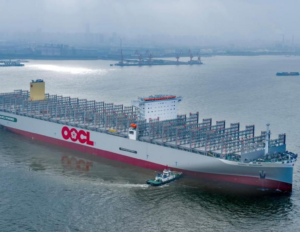
DP World Reports Strong Revenue and Profit Growth
According to its latest financial report, DP World recorded US$24.4 billion in revenue for 2025, representing a 22% increase compared to the previous year.
Meanwhile, adjusted EBITDA reached US$6.4 billion, up 18% year-on-year, driven by strong performance across its core business segments, including:
- Port operations
- Container terminal operations
- Logistics and supply chain services
- International maritime services
Total container throughput across DP World’s global port network reached 93.4 million TEUs, an increase of 5.8% compared with the previous year.
In addition, cash flow from operating activities rose 14% to US$6.3 billion.
Port and Logistics Businesses Continue to Grow
According to CEO Yuvraj Narayan, DP World’s strong performance was supported by:
- Stable cargo volumes
- Improved operational efficiency
- Optimized operating costs
- An 8.5% increase in revenue per TEU
During 2025, the Group also consolidated its maritime services under a single brand to strengthen its position as a global integrated logistics provider. DP World earns nearly $2 billion in profit. This strategy enables DP World to expand its role beyond port operations into transportation, warehousing, and end-to-end supply chain solutions.
DP World Increases Investment in Port Capacity Expansion
Over the past year, DP World invested approximately US$3.1 billion to expand port capacity and improve operational efficiency, compared with US$2.2 billion in the previous year.
As a result, the Group’s total port handling capacity has reached approximately 109 million TEUs. Key investment areas include:
- Expansion of container terminals
- Enhancement of logistics capabilities
- Upgrading transportation infrastructure
- Deployment of smart port management technologies
DP World Accelerates Its Green Logistics Strategy
In addition to its strong financial performance, DP World continues to advance its sustainability and decarbonization initiatives. According to the company, Scope 1 and Scope 2 greenhouse gas emissions in 2025 were reduced by 14% compared with 2022 levels. Notably, approximately 67% of the electricity consumed across DP World’s global operations now comes from renewable energy sources. This marks another important step in supporting the maritime and logistics industry’s transition toward greener and more sustainable operations. DP World earns nearly $2 billion in profit.
DP World to Continue Global Expansion in 2026
In 2026, DP World plans to invest approximately US$3 billion in major infrastructure projects across several countries.
Key projects include:
- Jebel Ali Port (United Arab Emirates)
- London Gateway (United Kingdom)
- Tuna Tekra (India)
- Ndayane Port (Senegal)
The expansion strategy is designed to strengthen the company’s integrated logistics network and meet growing global trade demand.
DP World Plays a Vital Role in the Global Supply Chain
Headquartered in Dubai, United Arab Emirates, DP World is one of the world’s leading port operators and logistics providers, with operations in more than 70 countries.
Its global network includes:
- International seaports
- Container terminals
- Logistics and warehousing facilities
- Transportation and end-to-end supply chain services
With its extensive global footprint, DP World continues to play a critical role in facilitating international trade and supporting the development of modern global supply chains.